
How Sports Betting Odds Actually Work — and What the TAB Monopoly Costs You
 Available in US
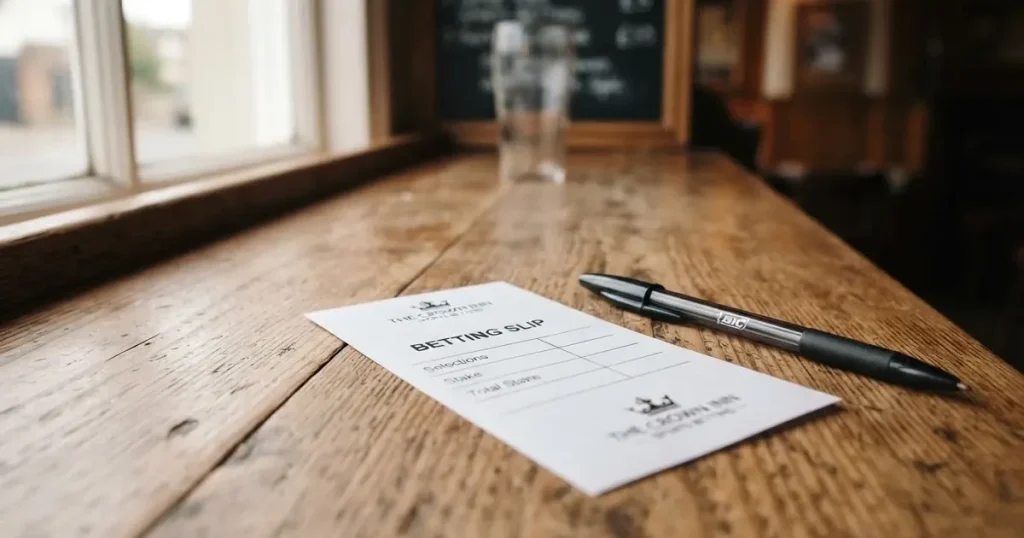
Betting odds are the language the bookmaker uses to tell you two things at once. The first is what a winning bet pays back for a given stake. The second, less often noticed, is how much the bookmaker intends to keep out of that bet over the long run. Both live inside the same number, and on a market with two near-equal outcomes priced at 1.90 and 1.90 the bookmaker’s cut works out to about 5.3% of every dollar staked — give or take a tenth, depending on how the rounding lands. The rest is what gets paid back to winning punters.
That second number has a name — the *margin*, sometimes called the *overround* or *vig* — and it is the single most important thing about a price that the price itself does not advertise. Two operators can show the same 2.10 on the All Blacks and run vastly different businesses underneath it, because what they take on every market, league and sport varies. The thin markets are where margin matters most: short-priced favourites, low-scoring draws, racing exotics. Reading odds without reading the margin is what the marketing wants.
This page works through how decimal odds settle, what a margin does to a price, what TAB NZ’s monopoly on online sports and racing betting in New Zealand actually means from the consumer side, and where the numbers come from that the bookmaker prefers to keep hidden. The reading is current as of October 30, 2026 against the Department of Internal Affairs public statements and TAB NZ’s own published terms.
How decimal odds settle a bet
A decimal price multiplies the stake into the total return — the original stake back, plus the profit on top. Place NZ$10 on the Black Caps at 2.10 and a winning bet returns NZ$21.00: the NZ$10 stake plus NZ$11.00 of profit. The same NZ$10 on an All Blacks head-to-head at 1.50 returns NZ$15.00 if it lands. The maths is the same in every market the bookmaker offers; what changes is how the price was built and what sits behind it.

For an accumulator — what TAB NZ and most New Zealand punters call a *multi* — the leg prices multiply into one combined price. Four legs at 2.00, 2.00, 1.80 and 1.80 produce a combined price of 12.96. The same NZ$10 stake returns NZ$129.60 if all four legs win. Withdraw one leg and the bet loses; void one leg and TAB NZ’s rules depend on the bet type and the number of remaining legs — a Same Game Multi (SGM) with a void selection can void the whole slip, while a multi with an independent void leg usually settles at the reduced price of the runners that remain. Read the rule on the betslip before staking; it varies by bookmaker and bet type.
Racing has its own settlement language. A *Win* bet pays the dividend if the runner finishes first; a *Place* bet pays a fraction of the dividend for runners that finish in the placings (top two for small fields, top three for larger ones, more again for handicaps). Each Way splits the stake in two — one Win unit, one Place unit — and pays on both outcomes. Exotics — Quinella (first two in any order), Exacta (first two in order), Trifecta (first three in order), First4 (first four in order), the Quaddie (the winner of four nominated races), Big6 (the same across six) — work the same way mathematically; the price isn’t published because the pool is parimutuel, and your return is your share of the pool after TAB NZ’s deduction.
Why two prices at 1.90 are not the same bet
Take a head-to-head market with two near-equal chances, priced at 1.90 and 1.90. A naive read says the returns are identical. They are not. Adding the implied probabilities together gives 1 ÷ 1.90 + 1 ÷ 1.90 = 0.5263 + 0.5263 = 1.0526. That extra 0.0526 — the 5.26% by which the bookmaker’s book exceeds 100% — is the margin. Bookmakers build it into every quoted price on every market; it is the cut taken across the long run from every dollar staked, regardless of which runner wins.

A market priced at 1.91 and 1.91 has an overround of about 4.71% (a margin of about 4.5%). The same outcome at 1.85 and 1.85 sits closer to 8.11% (a margin of about 7.5%). The difference looks trivial at the till and translates into the difference between a competitive bookmaker and a thin one, particularly on markets where punter volume is light or the sport is obscure. On heavy NFL or NRL markets the margin can sit under 3% in the headline markets and creep well past 10% on player props, alternate lines and combinations.
The flip side of a margin is the *payout share* — the fraction of the total stake pool returned to winning punters in the long run. A 5.26% margin is a 94.74% payout share. Payout share and margin are the same number seen from two directions and they always add up to 100%. A bookmaker advertising “95% payouts” is describing markets where it keeps about 5%; the same line, framed as a “5% margin”, describes the same markets and tells the reader who pays for it.
How a margin is calculated is the formula the page is built around: payout share = 1 ÷ (sum of 1/odds across every outcome of one market); margin = 1 − payout share. The arithmetic uses ALL outcomes of one market. A two-way market at 1.90 / 1.90 works out to a payout share in the band of roughly 94.7–95.0% — call it mid-94s — and a margin of mid-5%. State the result as a band with its condition, not as one figure: the band is the honest answer because it acknowledges that the precise percentage shifts with rounding and with how the bookmaker treats dead heats, voids and Rule 4 deductions.
A two-way market at 1.95 / 1.95 tightens the margin into the band of roughly 2.5–2.7%. That sounds competitive. The same two-way in a less-popular sport, with two outcomes priced at 1.80 / 1.80, widens the margin to roughly 11% — a third sport’s typical margin in disguise. Margins widen where volume is thin and the bookmaker carries more risk on each outcome. Where TAB NZ’s pricing on a market is genuinely sharp — heavy NRL, heavy NRL All Stars markets, Saturday rugby union — it tends to operate at the tighter end of that range; on low-volume sports and on exotics it widens.
Margin is not the same thing as the tax the operator pays or the platform fee TAB NZ passes back to the racing codes. It is the cut the bookmaker itself keeps for running the book. The two are layered: the margin funds the operator’s share; the platform fee and the Problem Gambling Levy (0.74% of betting revenue, in force from 1 July 2025 to 30 June 2028) sit behind it.
Same Game Multis, accumulators and the multiplication of margin
Margin compounds across legs of a multi. A two-leg multi on two independent 1.90 / 1.90 markets — a bettor’s apparent edge of 94.7% — becomes a payout share of about 89.7% on the combined bet, because the margins multiply. A five-leg multi at the same implied price drops the payout share below 78%. The bookmaker’s long-run take on accumulators is dramatically higher than on singles, and the headline marketing of “boosted odds” on multi legs almost never beats the compounded margin. The punter who reads 2.00, 2.00, 2.00 and 2.00 as four “value” prices has mis-read four bookmaker margins into one mega-margin.
Same Game Multis (SGM) compound the effect differently: the legs come from one event and the bookmaker correlates them under one another. The combined price is usually shorter than the multiplication of the leg prices on the same market — the bookmaker is paying for the fact that the legs cannot all be independent. TAB NZ publishes SGMs across rugby union, rugby league and other sports, alongside regular multis. In both cases the margin inside the headlined price is wider than the margin on a single bet.
What the TAB NZ monopoly means for a New Zealand punter
Since an amendment to the Racing Industry Act 2020 took effect on 28 June 2025, TAB NZ and its online sister brand Betcha are the only operators allowed to take online sports and racing bets from people in New Zealand. The Racing Industry Amendment Act 2025 inserted section 74AAA into the Act: no person other than TAB NZ may offer racing betting, sports betting or other racing or sports betting to a person in New Zealand, regardless of where that person is resident or incorporated. The Department of Internal Affairs told unlicensed providers to withdraw with immediate effect on that date. There is no licensing route for another bookmaker and no licence register for bookmakers because there is only one lawful provider.
TAB and Betcha are not rivals. They are the two online brands of TAB NZ, run under a 25-year partnership TAB NZ signed with Entain in 2023. Entain runs the TAB business, with a 50/50 share of gross profits under the deal, and at least NZ$150m a year going to TAB NZ for the first five years. Entain also pledged a one-off NZ$100m payment to the racing sector. The two brands run on shared infrastructure, with shared deposit rails and a shared safer-gambling framework — a self-exclusion applied through one account blocks the other. Comparing TAB with Betcha on price is comparing two windows onto one book.
For a New Zealand punter the practical consequence is fixed. The offshore brands you meet through online advertising, sports sponsorships or word of mouth — the names covered in the comparison table later in this page — operate outside the New Zealand regulatory framework. The Department of Internal Affairs publishes stated risks for them: minimal consumer safeguards, possible refusal to return unspent credits, possible refusal to pay out large wins. The offshore bookmaker is in breach of section 74AAA for serving New Zealand customers; no published penalty for the player was found, and the Gambling Act 2003 (as amended in 2025) says an individual may not be convicted for placing a bet with an offshore operator in breach of section 74AAA. The framing that fits the facts is straightforward: TAB NZ and Betcha are the only lawful option, with New Zealand harm-minimisation tools, regulator oversight and a complaints framework; offshore is unlawful for the operator to serve New Zealand, with no New Zealand complaints route. Neither path is “the safe choice” by default; the reader has to decide which standard they are claiming for.
Race codes, the closing calendar, and what is still legal to bet on
TAB NZ takes bets on thoroughbred racing, harness racing (the *trots*) and greyhound racing. Greyhound racing is closing in stages from 1 August 2026; from that date offshore operators may not take bets on greyhound races either. The closure is a calendar, not a price decision: bets already placed on greyhound races running after that date will be settled per TAB NZ’s rules. Other racing codes continue. The racing calendar runs through the spring — Melbourne Cup, Cup Day — and into the summer carnival, with NZ-bred runners carrying a different weight of local interest than the imported fields.
Sport runs alongside racing in the TAB NZ app and on the Betcha app, with rugby union, rugby league, cricket, basketball, football and a long tail of other sports. The Racing Industry Act 2020 covers all of them; the same prohibition applies to a Super Rugby Pacific match and to a Tuesday-night basketball game in any league. The question of whether esports is “sports betting” under the Act is not established, and the page treats the answer as not-known rather than assuming one way.
Virtual (computer-simulated) sport is treated by the Online Casino Gambling Act 2026 as casino gambling, not sports betting — a different licence regime, a different operator set, a different rule book. The casino law does not extend the betting monopoly, and TAB NZ winning the right to apply for a casino licence does not extend the betting monopoly either way.
Account age, ID and how a TAB NZ account opens
The age for betting with TAB NZ is 18; betting under 18 is an offence under section 89 of the Racing Industry Act 2020. The land-based casino age in New Zealand is 20 — never merge the two. A TAB NZ account needs a verified New Zealand address and verified ID before withdrawals; the verification sits behind the deposit limit and the safer-gambling tools. The opening sequence looks the same as it does at any regulated operator: identity check, address check, deposit method, then betting. The age check is the only part where the New Zealand law writes the answer down for the operator.
Responsible gambling under the New Zealand framework
TAB NZ provides safer-gambling tools in its app: deposit limits, time-outs and self-exclusion. The exclusion applies across both TAB NZ brands — block the account through one and the other is closed too. The tools sit alongside a phone line and a text service that TAB NZ lists in its app: the free Gambling Helpline (0800 654 655) and a text line (8006). Help is also available through Safer Gambling Aotearoa. New Zealand does not run a single national online-betting exclusion register — the register that the 2026 online casino law introduces covers online casinos only, not sports and racing.
The Problem Gambling Levy paid by TAB NZ is set at 0.74% of betting revenue, in force from 1 July 2025 to 30 June 2028. The levy funds harm-minimisation services; it is not a margin discussion and it does not change what the punter pays on a price. It is part of the duty TAB NZ carries for operating the monopoly.
Responsible gambling, stated in full here and not repeated further down the page, is a habit rather than a feature. Set a deposit limit before the first bet of the week, not after a losing one. Use the time-out tool in the app for a planned break rather than relying on willpower. Block the account at the first sign that chasing losses has started; the re-opening process is a friction by design.
What offshore brands can and cannot promise a New Zealand customer
A bookmaker licensed in Curaçao, Anjouan, the Tobique Gaming Commission, the Union of the Comoros or Costa Rica has a licence in its home jurisdiction and no right to take bets from people in New Zealand. The licence is real; the authority to serve a New Zealand customer is not. The brand’s complaints process is its own — outside the New Zealand harm-minimisation framework, outside the Department of Internal Affairs, outside the New Zealand courts. The payout of a large win is governed by the operator’s terms, not by a New Zealand consumer statute. The Department of Internal Affairs has flagged three risks that recur across offshore brands: minimal consumer safeguards, possible refusal to return unspent credits, possible refusal to pay out large wins.
The price point of an offshore brand is its main selling point and the most easily improved number on the comparison. A licensed-in-Curaçao brand on a NRL match can post tighter markets than TAB NZ does; the same brand on a Rugby League World Cup qualifier at 3am NZT can post markets TAB NZ does not run. Whether that price difference compensates for the loss of the New Zealand complaints route and the safer-gambling tools is the reader’s call, and it is the only judgement the page will not make for them.
What the odds format on the bookmaker’s site does and does not change
A bookmaker offering decimal, American, fractional, Hong Kong, Indonesian, Malaysian and British formats — all on one site — is offering the same market at the same price in seven different displays. The format conversion is arithmetic; the payout is identical and the margin is identical. Switching the display does not change the price, and the bettor’s stake in NZ dollars converts to the displayed unit at the book’s own rate. New Zealand sites and apps default to decimal; offshore sites default to the format the operator’s home market reads.
How the comparison works
The table below covers the operator set from research and rates each brand by the criteria a New Zealand reader typically applies. The columns are the points that matter: which operator it is, what its status in New Zealand is, and what the operator’s own terms state on the key’s subject. Every row is a direct read of what the bookmaker publishes; the description is qualitative, because the offer structures are different enough that a unit-by-unit comparison might mislead.
| Brand | New Zealand status | What the operator’s own terms state |
|---|---|---|
| TAB | TAB NZ brand — sole lawful operator | Fixed-odds and tote bets on racing and sport; Same Game Multis, Popular Multis; deposit limits, time-outs and self-exclusion in app; live betting in app |
| Betcha | TAB NZ brand — sole lawful operator | Daily Toolbox with odds boosts and insurance; Bet Social with tipsters and shared bets; Playbook with tips and match analysis |
| Thunderpick | Not licensed in New Zealand | Curaçao licence (OGL/2024/677/0722); markets on esports, sports and casino; no New Zealand complaints route |
| Rooster.bet | Not licensed in New Zealand | Tobique e-gaming licence (No. 0000002); Live, Sports Promotions, Results, Schedule, E-sports and Predictions sections; six odds formats |
| Winz.io | Not licensed in New Zealand | Anjouan and Tobique licences; markets on sports and casino with promotions attached |
| BetAlright | Not licensed in New Zealand | Names no licence that applies in New Zealand; accepts customers over 18 only |
| Sportaza | Not licensed in New Zealand | Cash out before settlement with no guarantee of availability; Bet Builder with void-on-void rule; Asian lines; 1/5/10/15-minute interval markets |
| FunBet | Not licensed in New Zealand | Markets on football, ice hockey, American football, basketball, volleyball, tennis, rugby and baseball; accumulators and bet builders listed |
| BillyBets | Not licensed in New Zealand | Decimal, American and fractional odds formats; cashback and reload bonuses on sports; coin shop exchangeable for free bets and free spins; five-level VIP |
| BetNinja | Not licensed in New Zealand | Union of the Comoros licence; sportsbook alongside casino |
A note on the rows. TAB and Betcha carry the New Zealand status because they are the only lawful options. Every other brand is “not licensed in New Zealand” — the same status under the same law, regardless of which offshore licence the brand displays. The comparison of features inside the third column is the page’s own reading: what the operator publishes is what the row states, and the row does not invent a feature research did not find.
The single most useful distinction the table cannot show is which of the two lawful operators runs the better price on a given market. TAB NZ operates one book; the two brands present it through two apps with different marketing layers — TAB carries the full range of bet types, Betcha carries odds boosts, an insurance layer and a social feed on top. The cost to the punter is the same margin; the value of the feature layer depends on whether the punter reads the Bet Social feed as useful or as a nudge.
TAB — what the operator’s own terms give a New Zealand punter
TAB is the older of the two TAB NZ online brands. Its app was first released on 8 September 2014 and carries horse and harness racing, rugby union and rugby league and other sports, pre-match and live, with the safer-gambling tools the framework requires. New TAB NZ customers can receive Bonus Cash that can be split across multiple bets, and the app lists a Mega Multi bonus when a multi of four or more legs falls short by a set number of legs; the terms govern the cash-out structure and are worth reading before staking. Place Extra lets punters back runners to finish up to 10th in selected races — a wider placement market than the standard Place terms. Trackside live race streaming with in-app betting is built into the TAB experience, along with racing form, Blackbook and Jockey Challenge tools. The age rating on the App Store is 17+; the betting age is 18.
The verdict on TAB is the verdict on the monopoly: TAB carries every market the New Zealand punters need, the prices are set by one bookmaker with full New Zealand regulatory oversight, the safer-gambling tools are real, and the lack of a competing bookmaker to keep the margin honest is the trade-off the law forces on every New Zealand punter. The price is set where TAB NZ sets it; if the margin looks wider than the offshore equivalent, the offshore alternative is not lawful in New Zealand. That is the choice the page describes, and the choice every other page in this pack cannot offer a New Zealand reader.
Betcha — what the operator’s own terms give a New Zealand punter
Betcha is the newer of the two TAB NZ online brands, with a marketing layer that reads as a different shop rather than a different operator. Daily Toolbox holds the day’s odds boosts and insurance tools for bets that do not land — the insurance is the same kind of cover that offshore brands call “acca insurance” with TAB NZ’s own product terms. Bet Social lets punters chat, follow tipsters and share bets or pools; the social feed is opt-in and live within the app. Playbook carries tips and match analysis.
The verdict on Betcha is “the second window on TAB NZ’s book for the punter who reads social betting as a feature rather than a nudge.” The marketing layer adds presentation; it does not change the margin. Where Betcha genuinely diverges is in how the bonus bets are framed, and the punter who reads the Bet Social feed as a tipster service treats every tip posted by another punter with the same scepticism they treat the marketing line “best odds” — neither one is what it says it is.
Thunderpick — what the operator’s own terms state
Thunderpick operates under a Curaçao licence (OGL/2024/677/0722) issued to Paloma Media B.V., and that licence gives it no right to take bets from people in New Zealand. The brand covers esports markets primarily, with sports and casino alongside. The verdict is the standard verdict for an offshore brand: a real licence in its own jurisdiction, no right to serve a New Zealand punter, no complaints route through the Department of Internal Affairs, and a payout governed by the operator’s own terms. The brand’s price point is its main tool for new sign-ups and the most easily improved number on its comparison row.
Rooster.bet — what the operator’s own terms state
Rooster.bet operates under a Tobique e-gaming licence (No. 0000002) issued to Novatrix SRL — a Costa Rica company. The site lists Live, Sports Promotions, Results, Schedule, E-sports and Predictions, with six odds formats covering the major world markets. The verdict carries the same weight as the Thunderpick verdict: a real licence at home, no authority in New Zealand, no New Zealand complaints route, and the price is what the price is.
Winz.io — what the operator’s own terms state
Winz.io lists two licences — Anjouan and Tobique — and the brand runs sports alongside casino and a promotion stack. The same caveat applies: no authority to take bets from people in New Zealand, no New Zealand complaints route, payout governed by the operator’s terms, and the price is what the price is.
BetAlright — what the operator’s own terms state
BetAlright accepts customers over 18 only and operates a separate partners site at partnersbetalright.com. The brand is not licensed in New Zealand. The 18+ threshold matches TAB NZ’s age; it does not change the regulatory position.
Sportaza — what the operator’s own terms state
Sportaza runs cash out before an event or market is finalised, Bet Builder with the rule that one void selection voids the whole betslip, multiples, Asian lines and interval markets in 1/5/10/15-minute ranges. The brand names an Anjouan licence (ALSI-202606064-FI2). Cash out is not guaranteed to be available — that wording matters because the punter who assumes a cash-out button exists at every market has assumed wrong. The verdict carries the standard offshore caveat, with the additional reminder that cash-out reliability is the operator’s own call.
FunBet — what the operator’s own terms state
FunBet runs markets on football, ice hockey, American football, basketball, volleyball, tennis, rugby and baseball, with live betting and a bookmaker open 24/7. Accumulators and bet builders are listed. The brand is not licensed in New Zealand. The long sport list and the 24/7 framing are the marketing surface; the rest of the picture is the standard offshore caveat.
BillyBets — what the operator’s own terms state
BillyBets lists three odds formats — Decimal, American and Fractional — and pairs the sportsbook with cashback and reload bonuses, a coin shop where coins earned through depositing, betting, tournaments and challenges are exchangeable for free bets and free spins, and a five-level VIP programme. The brand is not licensed in New Zealand. The bonus stack is the most attractive face the row presents; the wagering terms behind it are the page’s standard reason to read the offer’s small print before staking.
BetNinja — what the operator’s own terms state
BetNinja operates under a licence issued by the Union of the Comoros, with the sportsbook positioned alongside a casino section. The brand is not licensed in New Zealand, and the rest of the framing reads the same as every other offshore brand in the comparison.
Where the comparison ends and the marketing begins
The ten-row table above sits between the reader and a marketing claim. Marketing claims in this market cluster around three words: “best odds”, “risk-free”, “boosted”. Each of them is worth a paragraph.
“Best odds” is the claim the bookmaker does not need to make if the margin were visibly low. A bookmaker advertising “best odds” is asserting that its margin is lower than the next brand’s, and the assertion is rarely backed with a verifiable cross-market index. Where a brand quietly publishes a payout-share figure on its about page, read it. Where it doesn’t, calculate it from the prices: pick a market, take the implied probabilities across every outcome, and read the overround.
“Risk-free” is the claim most often applied to a first bet refunded as a free bet if it loses. The risk it removes from the bettor is the stake of the first bet; the risk it leaves in place is the wagering requirement on the free bet, the minimum price the free bet must be used at, and the deadline by which the free bet expires. A “risk-free” bet that pays back in free-bet form and requires the free bet to be turned over seven times at odds of 1.80 or higher before the bonus portion is withdrawable is a marketing-led product whose cost the marketing does not state.
“Boosted odds” is the claim most often applied to a price higher than the bookmaker’s standard line on the same selection. A boosted All Blacks price of 2.20 where the standard price is 2.00 is a real improvement — but only at that specific selection, only for the duration of the boost, and usually only on single bets (not on accumulators or on the same selection in an SGM). The boosted price also typically excludes cash-out, voids and Rule 4 deductions on racing. Read the boost terms before staking.
A close paraphrase of all three: the marketing word names a benefit; the small print defines its edges. The punter who reads the small print is not the punter the marketing is written for.
What a same-game multi at TAB NZ actually offers
TAB NZ lists same-game multis (SGM) across rugby union, rugby league and other sports. The legs come from one event; the price is shorter than the multiplication of the leg prices on the same market because the legs are correlated — an All Blacks try changes more than one market at once. Popular Multis are the same product pre-built by TAB NZ; the punter can take the combination as it is, or build their own. Mega Multi bonus pays up to NZ$50 in Bonus Cash when a multi of four or more legs falls short by a set number of legs — the structure is the bookmaker’s insurance on a near-miss, paid in Bonus Cash with its own wagering terms.
The verdict on SGMs is the verdict on accumulators elsewhere: the compounded margin inside the headline price is wider than the margin on a single, and the punter who reads “boosted odds” on the combined price is reading a marketing-led number. The bookmaker correlates the legs under one another; that is what they are paying for. Whether the price compensates depends on which legs the punter picks, and on how the bookmaker has set the correlation model.
What racing bets at TAB NZ actually settle
A *Win* bet is the simplest product on the TAB NZ board: back one runner to finish first. A *Place* bet pays a fraction of the dividend for runners that finish in the placings. Each Way splits the stake in two — Win unit and Place unit — and the bet pays on both outcomes if the runner finishes anywhere in the placings. Exotics work the same mathematically; the price isn’t published because the dividend is parimutuel — your share of the pool after TAB NZ’s deduction. Quinella (first two in any order), Exacta (first two in order), Trifecta (first three in order), First4 (first four in order), Running Double (winner of two consecutive races), Quaddie (winner of four nominated races), Big6 (winner of six) — each takes the punter further down the same book on a smaller pool, with a longer-priced payout when it lands.
The cost on the punter is the pool deduction TAB NZ applies. The pool deduction is not a margin in the decimal-odds sense, but it is the same underlying bookmaker-cut in a different shape. The racing dividend is a function of the pool and the runners who took the punter’s share out of it. Promoted as “winning” because the payouts are larger when they land; the math is unchanged.
How decimal odds connect to the rest of the industry
A 1.90 price in decimal form is a 10/11 in fractional odds (about −110 in American odds). The conversion is arithmetic; the market is the same. A bookmaker running British, European, Hong Kong, Indonesian, Malaysian and American odds formats is running one book and presenting it six ways. The punter’s stake and payout are independent of the format, and the margin inside the price does not change when the display changes.
What changes between formats is the reader’s intuition. Decimal reads “what I get back per dollar staked”; fractional reads “what I profit per dollar staked”; American reads “what I win per hundred staked on the favourite or what I risk per hundred won on the underdog”. The format is a language, not a price. New Zealand punters default to decimal; offshore sites default to the format of the book’s home market.
How to read the price on a betting app
A bookmaker’s price ladder sits inside the betting slip the moment the punter taps a selection. The price quoted is the price at that moment — markets move, and a price shown ten seconds ago may not be the price the bet is taken at. Where the market is a heavy in-play market (NFL, NRL, rugby union late in the match) the price is changing continuously; in-play markets on quiet sports are slower. The bet is placed at the price the app shows when the bettor confirms, not the price the app showed when the bettor opened the slip.
A best-practice read before staking: confirm the price, confirm the stake, confirm the bet type (Win, Place, Each Way, multi, SGM, exotic). A punter who skims the stake and reads the price back at the slip has accepted the price the app showed at confirmation time. The price the bettor thought they were getting is not always the price they got.
What this page does not cover
This page does not describe how to predict the outcome of any event. No source in the inputs says who will win the next All Blacks test, the next NRL match or the next Melbourne Cup, and no source can. The page explains how a bet is built, settled and paid out; what the margin inside a price does; and what the New Zealand legal framework permits a punter to bet with. The choice of who to back is the punters’ own, and the price they pay for being wrong is the margin the bookmaker built into every quoted line.
This page also does not cover online casino gambling. The Online Casino Gambling Act 2026 licences online casino gambling only and does not licence sports betting; the two regimes are separate, the operators are separate, and the harm-minimisation frameworks are separate. A reader comparing TAB NZ to an offshore casino brand is reading across regulatory regimes and must treat the comparison as marketing-led.
Final reading
Sports betting odds are a number that carries two things: the pay-out on a winning bet, and the bookmaker’s cut on every bet. Reading the first without the second is how the marketing wants you to read it. Reading the second is the whole job. The New Zealand framework closes off the second layer of competition — the offshore bookmakers with sharper margins on some markets — and replaces it with the first layer of legal protection. The trade-off the law forces on every New Zealand punter is the trade-off this page describes, and the only judgement the page refuses to make for the reader is the judgement of whether that trade-off is the right one for them.
Frequently Asked Questions
How do betting odds work?
A decimal price multiplies the stake into the total return — stake back, plus profit. A $10 bet on the All Blacks at 2.10 returns $21 if it lands; the same $10 at 1.50 returns $15. Multiply the leg prices together for a multi, settle the bet when the last leg is decided, and read the price as the booking-and-cut number the bookmaker publishes — not as a probability.
How do odds work with betting on horse racing?
TAB NZ takes Win, Place, Each Way, Quinella, Exacta, Trifecta, First4, Running Double, Quaddie and Big6 on racing; Place pays a fraction of the dividend on the placings, Each Way splits the stake in two, exotics work on a parimutuel pool rather than a fixed price. Decimal odds describe fixed-odds products; racing exotics settle on the dividend the pool produces after TAB NZ’s deduction. The bookmaker’s cut lives inside the dividend, just as it lives inside every decimal price.
How do you bet at horse races odds?
Open a TAB NZ account, pass the ID and address verification, deposit, pick a race, pick a runner, pick a bet type (Win for first, Place for the placings, Each Way to back both, exotics for combinations) and place the bet at the price shown on the slip. Confirm the slip before the jump — markets move in the final minutes, and the price the bookmaker takes the bet at is the price shown when the bettor confirms, not the price shown when the bettor opened the slip.
Which bookmaker may lawfully take sports and racing bets in New Zealand?
TAB NZ and its online sister brand Betcha are the only operators allowed to take online sports and racing bets from people in New Zealand since 28 June 2025, when an amendment to the Racing Industry Act 2020 inserted section 74AAA. TAB and Betcha are two brands of one operator; offshore brands licensed in Curaçao, Anjouan, Tobique, the Union of the Comoros or Costa Rica have no right to take bets from people in New Zealand, and the Department of Internal Affairs has flagged minimal consumer safeguards, possible refusal to return unspent credits and possible refusal to pay out large wins as the recurring risks on offshore brands.
How is the return on a bet worked out from the stake and the odds?
Multiply the stake by the decimal odds: a $10 stake at 2.10 returns $21 if it lands; the profit is $11 (return minus stake). For a multi, multiply the leg prices together before multiplying the stake: four legs at 2.00, 2.00, 1.80 and 1.80 produce a combined price of 12.96, and a $10 stake returns $129.60 if all four legs win. The stake-and-odds arithmetic is the same in every market the bookmaker offers; what changes is what sits behind the price.
What is the bookmaker’s margin and how can it be seen in the odds?
The margin is the cut the bookmaker keeps of every dollar staked on a market. Adding the implied probabilities of every outcome (1 divided by each price) gives a total over 100% — the extra is the margin. A two-way market priced at 1.90 and 1.90 has a margin of about 5.3%, which means a payout share of about 94.7%; the same market at 1.95 and 1.95 has a margin of about 2.6%. The margin is the same number as 100% minus the payout share, and it appears as the overround — the fraction by which the implied probabilities exceed 100%.
Tips & strategy – leaguebetsnz
Content created by the «leaguebetsnz» team
