
MMA betting in New Zealand: what the market looks like, what it costs, and where the value sits
 Available in US

*Current as of October 30, 2026 — verified against the Racing Industry Act 2020, the Department of Internal Affairs statements, TAB NZ and Betcha own terms, and the publicly listed product pages of the offshore bookmakers below.*
Mixed martial arts sits in an unusual spot in New Zealand. The fight game itself is global — the Ultimate Fighting Championship was founded on 12 November 1993, when UFC 1 was held at McNichols Sports Arena in Denver, Colorado, and today the promotion runs eleven weight divisions, eight for men and three for women. The betting market around it, in New Zealand, is one of the narrowest in the developed world. Only one operator group can lawfully take a sports bet from a person in New Zealand, and that group runs two online brands. Offshore bookmakers still find their way into a Kiwi punter’s phone, and several of them now run an MMA price board, but the law targets the operator that serves a New Zealand address — not the punter who opens the app.
What follows is the practical shape of MMA betting in New Zealand: how the market is built, what the law actually does, where the responsibility tools sit, what crypto and offshore access change, how live markets and cash out work, what predictions and tipsters are worth, how the bet types and the odds are constructed, which promotions and tournaments a Kiwi punter sees on the calendar, and which bookmakers meet the criteria for a New Zealand-based MMA punter. The short version is that the price the punter sees has a margin baked into it, and the offer attached to the price is structured to recover that margin and more. Reading the page is a way of seeing both before the stake is committed.
The shape of the market and the law that built it
A market with one legal supplier is, in effect, a different kind of market. There is still a price on every fight, and a margin inside that price, and a promotional offer that promises something extra, but the competitive pressure on each of those three things comes from a single set of commercial decisions rather than from a dozen rival brands racing to undercut each other. The place to start is the law that produces that.
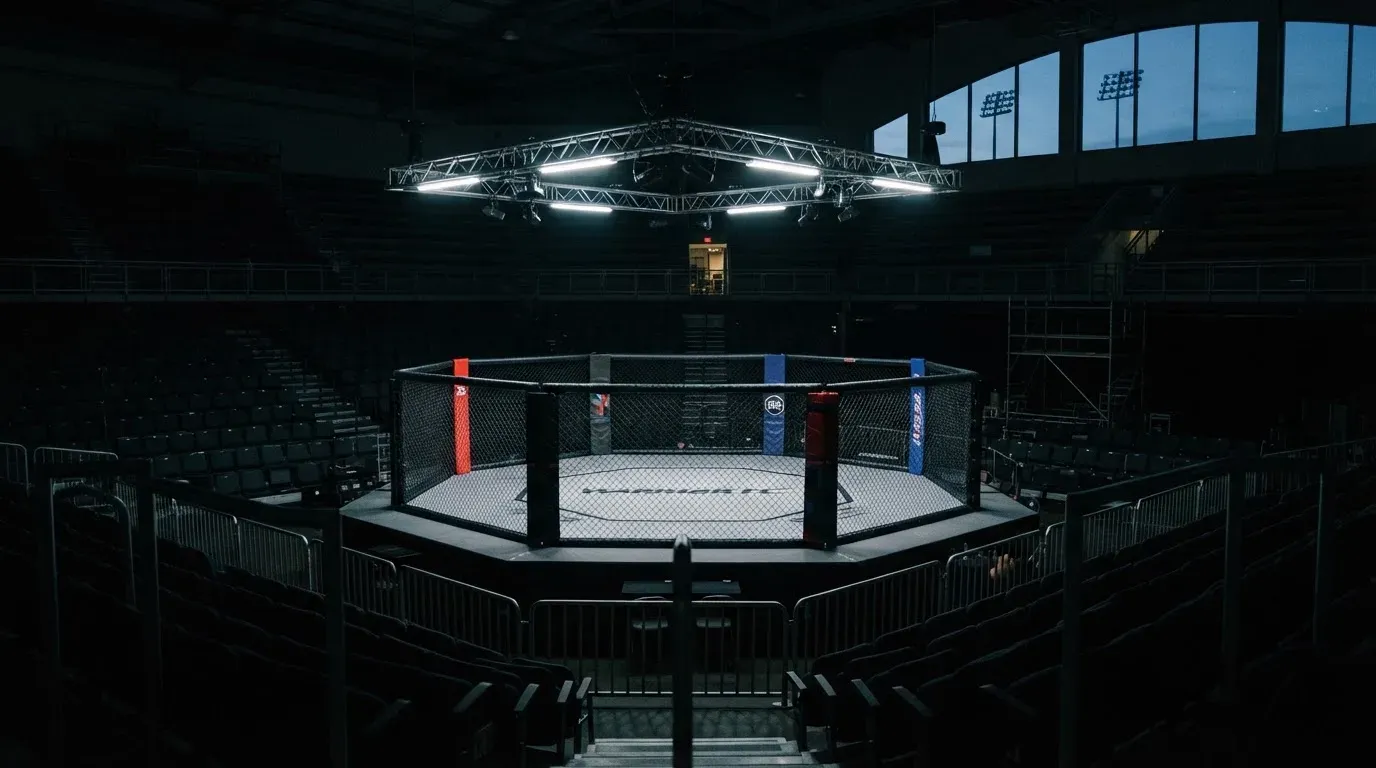
Why the New Zealand MMA market is smaller than it looks
A search for MMA betting in New Zealand turns up dozens of brands. They take bets on the UFC, Bellator, PFL and ONE Championship. They run price boosts on title fights, accumulators across cards, and live in-play markets between rounds. None of that matters under New Zealand law. Section 74AAA of the Racing Industry Act 2020, inserted by the Racing Industry Amendment Act 2025 and in force since 28 June 2025, says that no person other than TAB NZ may offer racing betting, sports betting or other racing or sports betting to a person in New Zealand, regardless of where that person is resident or incorporated. The Department of Internal Affairs told unlicensed providers to withdraw with immediate effect. There is no licence to apply for and no licence register, because there is only one lawful provider.
That makes the licensed set trivially small: TAB NZ, operating two online brands (TAB and Betcha). Every other bookmaker on a New Zealand punter’s screen, including the ten reviewed later in this page, is not licensed in New Zealand. New Zealand law targets the operator that serves a New Zealand address, not the punter who opens the account. Section 19(4) of the Gambling Act 2003, inserted in 2025, says an individual may not be convicted for placing a bet with an offshore operator in breach of section 74AAA. No source states a penalty for a player. DIA warns that offshore operators may be in jurisdictions with minimal consumer safeguards, may not return unspent credits, and may not pay out large wins — and that warning is the regulator’s honest framing of the trade-off, not a threat.
What TAB NZ actually offers, and how Entain sits behind it
TAB NZ is the trading name of the New Zealand Racing Board, the statutory body. Its app carries racing codes (thoroughbred, harness, greyhound — greyhound racing closes in stages from 1 August 2026) plus rugby union, rugby league, MMA/UFC, NBA, NFL, tennis, cricket, football, motorsports and esports. Betcha, the second TAB NZ brand, runs the same market set on a younger interface. They are the same operator, not rivals. The 25-year commercial partnership signed in 2023 between TAB NZ and Entain runs the TAB business, with Entain taking a 50/50 share of gross profits and a guaranteed minimum of $150 million a year flowing to TAB NZ for the first five years, alongside a one-off $100 million Entain payment to the racing sector. The platform is built and operated by Entain New Zealand Limited, the publisher named on the Betcha App Store listing. The punt, the odds, the wallet and the harm-minimisation framework are one product, with two front doors.
The eight offshore brands that meet a New Zealand punter
A page that only describes TAB NZ is honest, and short. The reality is that a New Zealand punter with a smartphone sees the marketing of brands that are not licensed here: Alawin, FunBet, LegendPlay, Thunderpick, Rabona, RTbet, Glorion and BetNinja. Each of those brands operates offshore, takes bets in euros or in cryptocurrency, and names a remote licence that gives no right to take bets from a person in New Zealand. Where a licence is named, it is an Anjouan Gaming Authority licence (LegendPlay), a Curaçao licence (Thunderpick, holder Paloma Media B.V.; Rabona; RTbet), or a Union of the Comoros licence (BetNinja). Alawin, FunBet and Glorion name no licence that applies in New Zealand. None of them has a New Zealand complaints route or a New Zealand harm-minimisation framework. None of them is what DIA calls the lawful option. The eight are reviewed here on the same criteria as the two licensed brands because New Zealand players meet them, with each reviewed write-up stating plainly that the brand is not licensed in New Zealand.
The law in plain terms: what section 74AAA actually changes
The legal frame is small enough to read end to end, and reading it is the difference between a punter who knows what the law is doing and one who finds out only when a withdrawal is delayed.
The statutory structure, top to bottom
The Gambling Act 2003 is the parent statute and sets the gambling regulator as the Department of Internal Affairs. The Racing Industry Act 2020 establishes TAB NZ as the sole provider of racing and sports betting in New Zealand and prohibits other operators from offering such bets. Section 92A of the Racing Industry Act 2020 is the betting prohibition, and section 89 is the offence of betting under 18. The Racing Industry Amendment Act 2025 inserted section 74AAA, in force from 28 June 2025, which closes the door on any other online operator offering racing or sports bets to a person in New Zealand. The Online Casino Gambling Act 2026 does something else: it sets up a licensing regime for online casino gambling, and TAB New Zealand has won the right to apply for a casino licence. Casino and betting are separate permits, with separate rules — a casino licence does not extend the betting monopoly, and an online casino betting line is not a sportsbook. Greyhound racing closes in stages from 1 August 2026, and offshore operators may not take bets on greyhound races from that date either.
What the law does, and what it does not
The law is operationally narrow. It does not block offshore websites from being reached from a New Zealand IP address. There is no payment-blocking order and no obligation on a bank to refuse a card transaction to an offshore bookmaker. It does not require an internet service provider to take down an offshore site. What it does is put the liability on the offshore operator that knowingly takes a bet from a person in New Zealand, and gives the regulator the power to direct the operator to withdraw. The penalty for breaching section 74AAA is not stated in the section, and no prosecution of an offshore bookmaker was found. The New Zealand punter, in other words, is in a position the law has chosen not to criminalise. The regulator’s response, in the absence of a player-side penalty, is to warn — and the warning is real: minimal consumer safeguards, no guarantee of returned credits, no guarantee of payout on a large win.
The “whistle-to-whistle” gap
The United Kingdom has a “whistle-to-whistle” ban on betting advertising around live sport. New Zealand has no equivalent. What it has is the Advertising Standards Authority’s Gambling Advertising Code, which says ads must not target children (under 14) or young people (14 to under 18), judged by context, appeal and expected audience (25% or more of the audience counts as significant where accurate data exists), must not encourage gambling harm, and must be truthful with terms available. TAB NZ’s own “bonus bets” promotions are run inside that frame, and the only rule on the size of a bonus bet or on its wagering terms is the rule TAB NZ itself sets.
Tax and the player
Recreational gambling winnings in New Zealand are generally not taxable. Prize money from TAB horse, dog and trotting races is not taxable. A punter who bets as a business is a different case, and the general advice from Inland Revenue is to consult an accountant. On the operator side, TAB NZ pays the Problem Gambling Levy of 0.74% (in force from 1 July 2025 to 30 June 2028). Offshore operators supplying New Zealand residents pay online gambling duty of 12% of profits since 1 July 2024, rising to 16% from 1 January 2027. A duty being payable does not make an offer lawful — the duty applies to a defined class of offshore operators, and the betting prohibition still applies. The point-of-consumption charge on offshore racing and sports bets ceased on 30 June 2026. None of this changes the punter’s tax position; it changes the operator’s.
Responsible gambling: the tools TAB NZ has to offer, and the help that sits outside it
The harm-minimisation frame is the section that ought to be the most boring on the page, because the rules are simple and the help is free. Boring is the right shape. What it has to be is complete, because a punter under pressure reaches for this section, not for the chapter on margins.
What the TAB NZ apps do, and what they ask the punter to set
The TAB NZ app carries deposit limits, time-outs and self-exclusion, listed on the New Zealand App Store description of “TAB – Racing & Sports Betting” (published under the seller name New Zealand Racing Board, first released on 8 September 2014). A deposit limit is a cap the punter sets on the amount that can be deposited in a chosen period (daily, weekly, monthly). A time-out is a short break from the platform, set in days. Self-exclusion is a longer block, set in months or years, and applies across the two TAB NZ brands, so a self-exclusion on TAB also closes a Betcha account. The age for TAB NZ betting is 18 — betting under 18 is an offence under section 89 of the Racing Industry Act 2020. The TAB NZ app carries a 17+ age rating on the New Zealand App Store while stating that customers must be 18 or over. Land-based casinos in New Zealand are 20. The two ages are different, and the punter’s age obligation depends on the product.
The Gambling Helpline and Safer Gambling Aotearoa
The free Gambling Helpline in New Zealand is 0800 654 655, with a text line at 8006, and the same number is listed in the TAB NZ app description. Safer Gambling Aotearoa is the public-facing service. Both are free, both are confidential, and both work for punter and for family. There is no single national online-betting exclusion register; the register the Online Casino Gambling Act 2026 will require is for online casinos only, not for sportsbooks.
What an offshore bookmaker does not offer
An offshore bookmaker has no New Zealand-recognised self-exclusion that interacts with the helpline, no obligation to feed a New Zealand harm-minimisation framework, and no New Zealand complaints route. Its own responsible-gambling page, where one exists, is built around its own licence. A punter who has set a TAB NZ self-exclusion and then opens an offshore account has not extended the self-exclusion — the offshore brand has no way of knowing. That is one of the regulator’s stated risks, framed plainly. A punter with a self-exclusion in place who is choosing between honouring it and circumventing it by switching brands is choosing, not slipping; the choice is the punter’s, and the regulator is honest that the offshore product cannot help with it.
Crypto, anonymity, and what the offshore brands change about the picture
The crypto betting market is one of the louder parts of an offshore sportsbook. It is also the part where the marketing lives furthest from the law, and the gap matters.
What crypto changes about access
Bitcoin MMA betting, crypto MMA betting, MMA betting with bitcoin — these are search terms that name the same product, in three phrasings. A crypto sportsbook takes deposits in bitcoin, ethereum, USDT and a small set of other coins, settles withdrawals in the same coin, and runs no fiat banking leg at all. The punter opens an account with an email address and a wallet, and the deposit clears through the ledger rather than through a card processor. The legal effect in New Zealand is the same: the brand is not licensed here, the prohibition in section 74AAA still applies, and the regulator’s stated risks are unchanged. The practical effect is different. A crypto deposit does not show up on a bank statement under the bookmaker’s name, and a New Zealand bank has no obligation under the law to refuse the card transaction to an offshore fiat bookmaker but will not see the crypto transaction at all. That difference is what the marketing leans on, and the difference is real, but the underlying legal status of the bet is unchanged.
What the named brands actually run
The eight offshore brands reviewed here vary in their fiat and crypto support and MMA depth. Alawin operates as a soft2Bet-style product for those avoiding the regulated route. FunBet provides a twenty-four-hour service without local oversight. LegendPlay and Thunderpick offer distinct sports focuses, with Thunderpick prioritizing esports. Rabona and RTbet function as larger Curacao-licensed operations, while Glorion manages a broader entertainment catalogue. BetNinja emphasizes casino bonuses. Each operates outside the New Zealand regulatory framework.
What that means in plain terms: a New Zealand punter looking for an MMA price board finds that the licensed product (TAB NZ, through TAB and Betcha) is the product that has the MMA book, and the offshore brands vary in how deep their MMA coverage is. The home-page summary of a sportsbook is not the book; a punter checks the MMA tab and the live MMA tab of the offshore brand they mean to use, and decides on what is actually there.
What crypto does not change
Crypto does not change the fact that the bet, once struck, is recorded in the operator’s system and paid out under the operator’s terms. Crypto does not change the regulator’s stance: the operator that knowingly takes a bet from a person in New Zealand is breaking section 74AAA, and DIA has not stated otherwise. Crypto does not change the absence of a New Zealand complaints route. What crypto changes is the payment rail, and the payment rail is one piece of the picture rather than the whole of it.
Live betting, cash out, and what the in-play market actually shows
Live MMA betting is one of the two products the search terms point at most clearly. The other is the cash-out feature, which lets a punter close a position before the fight ends. Both are explained in the same breath because they share a market mechanic.
How the live MMA market runs
A live MMA market is, in the first instance, a market that updates between rounds. The pre-market price on a fighter reflects the model’s pre-fight read; once the fight starts, that read is replaced by what is happening in the cage. A knockdown changes the price. A takedown that costs a fighter a round changes the price. A submission attempt that ends a round changes the price more. The market re-prices continuously from the first horn to the final bell, and a punter who has backed a fighter pre-fight can watch the price move with the action. TAB NZ’s apps list live betting; the same is true of Betcha. The same is true of the offshore brands whose home pages name a live betting section: Alawin, FunBet, LegendPlay, Thunderpick, RTbet, Glorion all name a live betting product, and the public material does not establish how deep their live MMA book runs.
What a New Zealand punter can and cannot bet on live
The legal position is: live betting from TAB NZ or Betcha is the lawful option. The offshore live MMA book is not lawful for the operator, although the punter is not penalised for placing it. There is no statutory restriction on in-play MMA markets in New Zealand — the prohibition is on the operator, not on the market. The market that does not exist lawfully is the betting exchange. No lawful New Zealand betting exchange exists, and spread betting is outside TAB NZ’s sports-betting definition.
What cash out does, and what it costs
A cash-out feature lets the punter close a multi or a single before the fight ends, at a price set by the operator. The price is a function of where the live market is and of how much margin the operator wants to keep on the close. The marketing word is “take your profit”; the arithmetic is the operator’s mid-market price minus its margin, and the margin on a cash-out close tends to be wider than the margin on a pre-fight price. The punter’s edge on a cash-out is the certainty of locking in a number rather than letting the position ride; the punter’s cost is the wider margin. Thunderpick names a cash-out feature on its sportsbook. TAB NZ’s apps name a live betting product; the public material does not establish whether TAB NZ runs a cash-out button or settles live positions only at the bell. The punter checks the betting slip and the live tab to see what is on offer.
Predictions, tips, and what a tipster is actually selling
The market for MMA predictions and tips is louder than the market for any other MMA betting product. It is also the one place where the gap between what is sold and what is delivered is widest, and a punter who has not thought about the gap is the punter the gap is built for.
What a tipster sells
A tipster sells a forecast. The forecast names a fighter, a price and sometimes a stake. The forecast is delivered before a fight, with a reason attached, and the reason is what the tipster charges for: a read on a fighter’s form, a matchup, a stylistic edge. The product is a forecast, not a result, and a tipster who gets half their forecasts right is on the upper end of the public rate of return. The result side of the business is the tipster’s record, posted on a tipping site or in a Telegram channel, and the record is the part a punter ought to read before paying.
Why a forecast is not a result
A forecast is a probability statement, dressed as a tip. A punter who buys the forecast and lays the bet at the tipster’s price is not buying a win; the punter is buying the tipster’s read on the price. If the tipster’s read is right more often than the price implies, the tipster has an edge; if not, the punter pays for a forecast that loses at the same rate the price might have lost at unaided. The honest framing is: a tip is one read among many, the price is the market’s read, and a punter who wants to be paid for thinking chooses between them. There is no system that wins at a rate the price does not already price in, and a tipster who claims one is selling a different product.
What the search terms for “mma bets today” actually look like
A search for “mma bets today” is a search for a card and a price, not for a forecast. The card comes from the UFC schedule and from the regional promotions (Bellator, PFL, ONE Championship, and the smaller circuits that show up on a New Zealand schedule with time-zone lag). The price comes from the bookmaker. A punter who reaches the card through a tip is doing the work in the wrong order: the card and the price come first, and the punter’s read on the card is what the tip is competing with. A punter who is paying for tips is paying for someone else’s read; a punter who is not paying is reading the card on their own and laying the price the market gives.
Bet types, odds, and what a market on a fight actually looks like
The bet types and the odds are the page where the math lives. They are also the part of the page a punter has the most reason to read slowly, because a misunderstanding at this level is paid for in real money.
The fight markets a punter sees
The standard markets on a UFC or Bellator main event are: moneyline (the outright winner), method of victory (KO/TKO, submission, decision), over/under on the total rounds, and a handful of player props (fighter to win by KO, fighter to win in round one, fight to go the distance, and a “significant strike” or “takedown” market that some books now run). An MMA accumulator bet stacks several fights into one ticket at multiplied odds, and the all-or-nothing structure of an accumulator is the reason the marketing word is “multi” rather than “bet”. A same-game multi takes several markets from one fight onto one ticket; the legs come from one event, but the structure is the same. The TAB NZ betting rules define a wider set of markets for racing than for sports: Win, Place, Each Way, Quinella, Exacta, Trifecta, First Four, Double, Treble, Daily Double, Running Double, Quaddie, Big6, Multis and Same Game Multis. The punter checks the operator’s tab on the day.
Decimal odds and how the return is built
The price on a fight is a decimal price. A price of 2.10 means a $10 stake returns $21, which is the $10 stake plus an $11 profit. A price of 1.50 means a $10 stake returns $15, which is the $10 stake plus a $5 profit. The formula is the same on every price: return = stake × odds, and net profit = stake × (odds − 1). For a combination bet, the odds of the legs multiply into one price; a three-leg multi with legs at 1.80, 2.20 and 1.95 is a 7.722 price, and a $10 stake returns $77.22 if all three legs win. The formula is the same on every multi, and the marketing word is not what carries the math — the price is.
The bookmaker’s margin, in the price
Every price on a market carries the bookmaker’s margin. The margin is the share of every unit bet on the market that the bookmaker keeps on average; it is the cost the punter pays for the privilege of betting, and it is baked into the price rather than charged separately. The way to see it is to take all the outcomes of a market, convert each outcome’s odds into an implied probability (1 ÷ odds), and add the implied probabilities together. On a perfectly fair two-way market with no margin, the implied probabilities sum to 1.00 (or 100%). On a real market, they sum to more than 1.00, and the excess is the margin. The calculation in plain prose, on a two-way market at 1.90 / 1.90 (an illustrative pair, not a quoted price): implied probability on each side is 1 ÷ 1.90 = 0.526, the sum is 1.053, and the payout share — the share of every unit returned to punters on average — is 1 ÷ 1.053 = 0.950. The margin is 1 − 0.950 = 0.050, or 5.0%. The same calculation on 1.85 / 1.85 gives 1 ÷ 1.85 = 0.541 on each side, a sum of 1.081, a payout share of 0.925, and a margin of 7.5%. On 1.95 / 1.95, the implied probability on each side is 0.513, the sum is 1.026, the payout share is 0.975, and the margin is 2.5%. The shape of the band is the point: every real-money market carries a margin, and a punter choosing between prices chooses between margins, with the rest of the market as a tiebreaker.
Why a price boost is not what the marketing says
A “boosted odds” offer is a marketing word for a price that the operator has decided to inflate for a window. The inflated price is a price with a temporarily lower margin, and the lower margin is funded by the offer attached to it (a “bonus bet” stake, a free-bet stake whose value is not paid back with a win, an accumulator insurance that refunds a losing leg as a free bet, a cashback that returns a share of a day’s losses). The arithmetic that funds the boost is the same arithmetic that funds the offer. A punter who reads a “100% bonus” as a doubling of the stake is reading a marketing word; the same offer is a deposit match with a wagering requirement, and the wagering requirement is the part the marketing does not put in the headline.
The calculator and its limits
An MMA betting odds calculator is a tool that does the math on a multi or a single before the punter lays the stake. It accepts a price and a stake, returns the total return and the net profit, and it accepts a list of legs and returns the multiplied price. It is useful for a punter who wants to know what a multi pays before clicking “place bet”. It does not change the margin in the price, and it does not turn a losing price into a winning one. The honest framing of a calculator is: it tells the punter what the price pays; it does not tell the punter whether the price is right.
The MMA calendar and the tournaments a New Zealand punter sees
The MMA calendar is the second product the search terms point at most clearly. The first is the market; the calendar is the input to it.
The promotions a New Zealand punter sees on the TAB NZ book
TAB NZ takes bets on MMA/UFC events, and the market list comes from TAB NZ’s own terms rather than from a third-party feed. The UFC is the main promotion; Bellator, PFL and ONE Championship appear on cards at intervals. Regional circuits — LFA, Cage Warriors, Eternal MMA, the Australian regional shows — appear on TAB NZ’s book where the operator has priced them. A punter who is on the TAB NZ app sees the cards the operator has priced, and the gap between “the card is on tonight” and “the card is on the TAB NZ book” is the operator’s commercial decision rather than a regulatory one.
The cards a New Zealand punter sees with time-zone lag
A UFC card in Las Vegas on a Saturday night local time is a Sunday afternoon card in New Zealand. A Bellator card in Milan on a Friday evening is a Saturday morning card in Auckland. The time-zone lag means a New Zealand punter sees most major cards on a weekend afternoon, and a punter who is laying pre-fight prices is laying them twelve to twenty hours after the market first opened in the United States. The market moves in that window, and the punter’s price is the market’s New Zealand price rather than the market’s United States price. A punter who wants the United States price is on a United States book, and the New Zealand legal position on a United States book is the same as on any other offshore book.
Weight classes, scoring, and what the page needs to say
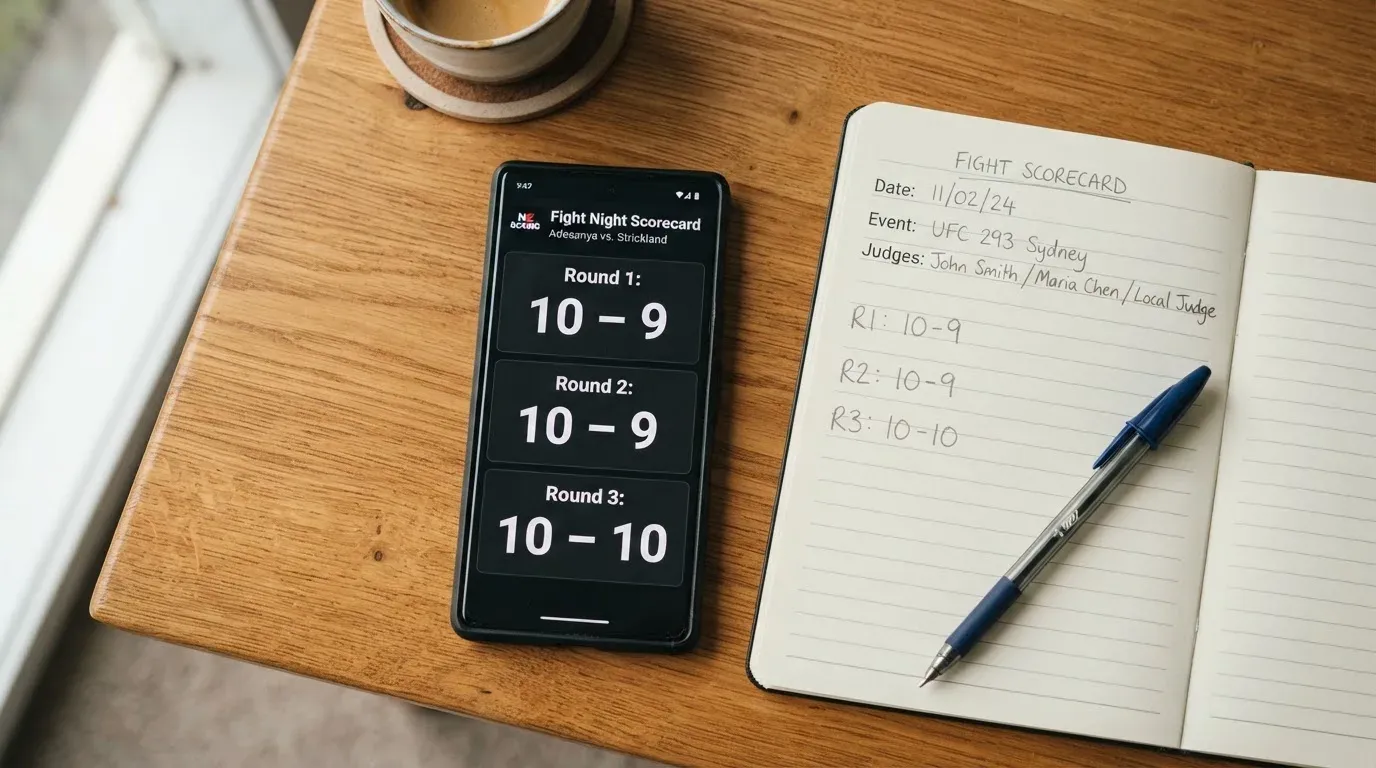
The UFC has eleven weight divisions: eight men’s (flyweight, bantamweight, featherweight, lightweight, welterweight, middleweight, light heavyweight, heavyweight) and three women’s (strawweight, flyweight, bantamweight). Under the Unified Rules of mixed martial arts, each round lasts five minutes with a one-minute rest between rounds; non-title bouts normally go no more than three rounds, while title bouts can be sanctioned for five rounds. In the ten-point must system, three judges score each round: the round winner gets ten points, the loser nine or fewer, and an even round is scored 10–10. A decision can be unanimous, majority or split, and a draw can be unanimous, majority or split. A bout ends in disqualification if an intentional foul incapacitates a fighter, and in a no contest if an unintentional foul incapacitates a fighter. The page that names these rules is the page that lets a punter read a method-of-victory market without guessing; the markets that name a finish in round one, a finish by submission, or a decision at the end of a five-round title fight are markets that the rules determine.
The reviewed operators: what each one offers a New Zealand punter, and what the offer actually costs
The ten operators below are the set reviewed on this page. The first two are the two online brands of TAB NZ, the only provider lawfully offering racing and sports betting here since 28 June 2025. The next eight are offshore brands, each named with the statement that the brand is not licensed here and that the brand names no New Zealand-recognised licence. The verdicts are this page’s.
TAB (TAB NZ’s flagship brand)
TAB is one of the two online brands of TAB NZ, the only provider lawfully offering racing and sports bets here. The brand carries racing codes (thoroughbred, harness, greyhound until 1 August 2026) plus rugby union, rugby league, MMA/UFC, NBA, NFL, tennis, cricket, football, motorsports and esports. Live betting is listed in the app. The app carries Trackside live race streaming with in-app betting, racing form, Blackbook and Jockey Challenge tools, and a simplified wallet for deposits and withdrawals. The age requirement is 18 (the app carries a 17+ App Store rating while stating the 18 requirement). The harm-minimisation tools are deposit limits, time-outs and self-exclusion. The Gambling Helpline is 0800 654 655. The platform is built and operated under the 25-year Entain partnership. Verdict 1: for a New Zealand punter who wants a sportsbook under New Zealand law with New Zealand harm-minimisation tools and a regulator’s complaints route, TAB is the lawful option, with the trade-off being a market list that reflects one operator’s commercial choices.
Betcha (TAB NZ’s online sister brand)
Betcha is the second of the two online brands of TAB NZ, the only provider lawfully offering racing and sports bets here. The brand runs the same market set as TAB on a younger interface, with horse, greyhound and harness racing plus rugby, NRL, MMA/UFC, NBA, NFL, tennis, cricket, football, motorsports and esports. The app is published on the New Zealand App Store by Entain New Zealand Limited and was first released on 6 August 2024. The platform’s harm-minimisation tools, age requirement, helpline and self-exclusion framework are TAB NZ’s, so a self-exclusion on TAB also closes a Betcha account. Verdict 2: for a New Zealand punter who wants the same product as TAB on a more recent app, Betcha is the second door into the same operator group, where the choice between TAB and Betcha is a front-end decision.
Alawin
Alawin is not licensed here. It provides a variety of mainstream sporting markets, though MMA coverage is not confirmed. The New Zealand punter’s complaint route is not a local one. Verdict 3: Alawin is a larger soft2Bet-style product for a punter seeking to avoid the regulated route.
FunBet
FunBet is not licensed here. The sportsbook offers odds on football, ice hockey, American football, basketball, volleyball, tennis, rugby and baseball, with live betting and a bookmaker described as open 24/7. MMA is not in the named list on the public home page. The New Zealand punter’s complaint route is not a New Zealand one. Verdict 4: FunBet is a twenty-four-hour product with a non-New Zealand licence and lacks a local regulator’s complaints route.
LegendPlay
LegendPlay operates without a New Zealand licence; TAB NZ remains the only lawful provider. LegendPlay names an Anjouan Gaming Authority licence, which does not permit taking bets from New Zealand residents. Its sports, live betting, and virtual sports sections cover football, tennis, basketball, and ice hockey. MMA coverage is not explicitly listed on the main site.
Thunderpick
Thunderpick is not licensed here. The brand names a Curaçao licence (OGL/2024/677/0722), holder Paloma Media B.V., which gives no right to take bets from people in New Zealand. The brand is esports-first, covering CS2, League of Legends, Dota 2 and Valorant, and its sportsbook offers a cash-out feature and markets from the Champions League to the NFL. MMA is not named on the home page summary. Verdict 5: Thunderpick is a Curaçao-licensed esports book with a cash-out feature, offering an alternative for those seeking offshore options.
Rabona
Rabona is not licensed here. The brand names a Curaçao licence, which gives no right to take bets from people in New Zealand. Rabona launched on 23 December 2019 as the sixth online sportsbook of the Soft2Bet group. The market list is not summarised in the public material, and a punter who wants to use Rabona checks the brand’s own site for the MMA tab. Verdict 6: Rabona is one of the larger soft2Bet products, which operates outside the local regulatory scope.
RTbet
RTbet is not licensed here. It offers various mainstream sports markets alongside virtual sports and live betting options. It operates outside the scope of New Zealand regulations.
Glorion
Glorion is not licensed here. The brand names no licence that applies here. The sportsbook offers pre-match and live betting, virtual sports, horse racing and esports, with markets grouped into popular, niche, indoor and outdoor sports plus entertainment events. MMA is not named explicitly in the public material. Verdict 7: Glorion is a brand with a wider event catalogue than the standard sportsbook, operating without local New Zealand oversight.
BetNinja
BetNinja operates without a local licence; TAB NZ is the sole lawful provider. It offers a casino welcome of EUR 1,000 bonus plus 100 free spins, alongside a sports offer of a 100% match up to EUR 100. Market summaries are unavailable publicly, so users must verify the MMA tab directly. Verdict 8: BetNinja is a Comoros-licensed product featuring casino-focused promotions alongside sports betting.
The market at a glance: a New Zealand punter’s read on each reviewed bookmaker
The table below summarises the New Zealand status of each reviewed bookmaker and the relevant statement of each operator’s own terms. The columns are: the brand; the New Zealand status (TAB NZ brand, or not licensed in New Zealand); and what the operator’s own terms state on the key’s subject (MMA, live betting, payment method, or harm-minimisation framework, as research carries it).
| Brand | New Zealand status | What the operator’s own terms state |
|---|---|---|
| TAB | TAB NZ brand (Racing Industry Act 2020, section 74AAA) | Markets include MMA/UFC; live betting; deposit limits, time-outs, self-exclusion; 18+ |
| Betcha | TAB NZ brand (Racing Industry Act 2020, section 74AAA) | Markets include MMA/UFC; live betting; TAB NZ harm-minimisation framework applies; 18+ |
| Alawin | Not licensed in New Zealand | Football, tennis, table tennis, basketball, ice hockey, American football, baseball; live betting, virtual sports, esports; no New Zealand-recognised licence named |
| FunBet | Not licensed in New Zealand | Football, ice hockey, American football, basketball, volleyball, tennis, rugby, baseball; live betting; bookmaker described as open 24/7; no New Zealand-recognised licence named |
| LegendPlay | Not licensed in New Zealand | Football, tennis, basketball, ice hockey; Sports, Live Betting, Virtual Sports sections; Anjouan Gaming Authority licence |
| Thunderpick | Not licensed in New Zealand | Esports-first: CS2, League of Legends, Dota 2, Valorant; sportsbook includes cash-out; Curaçao licence (OGL/2024/677/0722, holder Paloma Media B.V.) |
| Rabona | Not licensed in New Zealand | Launched 23 December 2019 as the sixth soft2Bet sportsbook; Curaçao licence; market list not summarised in the public material |
| RTbet | Not licensed in New Zealand | Football, tennis, table tennis, basketball, ice hockey, American football, baseball; live betting, virtual sports; Curaçao licence |
| Glorion | Not licensed in New Zealand | Pre-match and live betting, virtual sports, horse racing, esports; popular, niche, indoor, outdoor and entertainment groupings; no New Zealand-recognised licence named |
| BetNinja | Not licensed in New Zealand | Casino welcome of EUR 1,000 bonus and 100 free spins; sports offer of a 100% match up to EUR 100 on the first deposit; Union of the Comoros licence |
The first two rows are the lawful options for a New Zealand punter, and the table says so directly. The next eight rows are the offshore brands a New Zealand punter is likely to meet on a search for “best MMA betting site”, and the table states for each one that the brand is not licensed in New Zealand, with a single line on what the operator’s own terms say about the markets covered. A punter who reads the table alongside the operator write-ups above sees, for each brand, the same point from two directions: the regulator’s frame (not licensed in New Zealand) and the operator’s own product page (what the home page says the book carries).
What the cost of an offer looks like, in numbers
A “bonus bet” or a “boosted odds” offer is a marketing word for an offer with a real cost. The cost is the margin on the bets the offer is cleared through, the minimum price the book requires, the time the offer has to clear, and the cap on the free-bet winnings. The number a punter needs is the number the marketing does not put in the headline.
The illustrative calculation in this section is on a two-way market at 1.90 / 1.90, an example, not a quoted price. The implied probability on each side is 1 ÷ 1.90, the sum is 1.053, the payout share is 1 ÷ 1.053 = 0.950, and the margin is 1 − 0.950 = 0.050, or 5.0%. On a real market, the margin sits in a band: a tight 1X2 market on a major fight might run at 3.5 to 5.0%, a player-prop market at 6 to 8%, a long-shot method-of-victory market at 8 to 12%. The band is the information: a punter who has the band reads the headline price against it, and a punter who does not has only the price. Where research gives a price with a snapshot date, the date is in the sentence beside the price; where research gives a price without a date, the page describes it in words rather than printing the number.
A free bet whose stake is not paid back with a win is worth, on a market at price *p* with a payout share of *s*, free-bet amount × (*p* − 1) ÷ *p* × *s*. On a $10 free bet at 1.90 with a 95% payout share, that is $10 × 0.90 ÷ 1.90 × 0.95 = $4.50. The headline word is “free $10 bet”; the average value, on this market at this price, is $4.50, and the punter’s expected loss on the same market, were they wagering the same $10 of their own money, is $10 × 5.0% margin = $0.50. The free bet looks generous until the math is done; the math says the operator is paying $4.50 in expected value to win $0.50 of the punter’s stake on the clearing bets. The arithmetic is the same on every free bet, and the marketing word does not change it.
A deposit-gated package — “100% match up to EUR 100” — is a bonus equal to the deposit, capped at the named ceiling, with a wagering requirement that determines how much betting the bonus takes. The wagering factor is the number research names: a 6x turnover on the bonus means a EUR 100 bonus requires EUR 600 of qualifying bets, and the qualifying bets are at a minimum price the operator sets. A punter who reads the wagering factor and the minimum price sees the cost; a punter who reads the headline reads a marketing word.
Frequently asked questions about MMA betting in New Zealand
A bookmaker offers prices on the fights the operator has priced, and a punter lays a stake on the outcome the punter thinks is most likely. The price is a decimal number: a $10 stake at 2.10 returns $21 if the bet wins, which is the $10 stake plus an $11 profit. The price carries a margin, and the margin is the share of every unit bet on the market that the bookmaker keeps on average. A punter who wants to know what a market really costs converts each side’s price into an implied probability (1 ÷ odds) and adds the probabilities together — the excess over 100% is the margin. On a two-way market at 1.90 / 1.90, that is 5.0%. The shape of the bet is a moneyline (the outright winner), a method-of-victory bet, an over/under on the total rounds, or a multi that stacks several fights on one ticket. In New Zealand, the bookmaker is TAB NZ (TAB or Betcha) under section 74AAA of the Racing Industry Act 2020; the same product on an offshore book is the same product outside the New Zealand regulatory frame.
How do you bet on MMA fights in New Zealand?
A New Zealand punter opens an account with TAB NZ (through either the TAB or the Betcha app), verifies a New Zealand address and ID, sets a deposit limit, and lays a stake on the fight the punter wants to bet on. The age requirement is 18, and the app carries a 17+ App Store rating while stating the 18 requirement. The markets the punter sees are the markets the operator has priced: moneyline, method of victory, over/under on rounds, player props, and same-game or multi-fight multis. A punter who has decided to use an offshore book does the same thing on the offshore brand’s site, with the trade-off that the offshore brand is not licensed in New Zealand, that the regulator’s stated risks apply, and that no New Zealand complaints route or harm-minimisation framework reaches the offshore brand. A punter who has set a self-exclusion on TAB NZ and then opens an offshore account has not extended the self-exclusion — the offshore brand has no way of knowing, and the choice to bet is the punter’s.
Which bookmaker may lawfully take sports and racing bets in New Zealand?
TAB NZ, through its two online brands TAB and Betcha, is the only provider lawfully offering racing and sports betting to people in New Zealand since 28 June 2025, under section 74AAA of the Racing Industry Act 2020, inserted by the Racing Industry Amendment Act 2025. The Department of Internal Affairs told unlicensed providers to withdraw with immediate effect. There is no licence to apply for and no licence register for bookmakers, because there is only one lawful provider. Every other brand a New Zealand punter meets on a search for “best MMA betting site” is not licensed in New Zealand. New Zealand law targets the operator that knowingly takes a bet from a person in New Zealand; section 19(4) of the Gambling Act 2003, inserted in 2025, says an individual may not be convicted for placing a bet with an offshore operator in breach of section 74AAA. The regulator’s framing of an offshore bet is the honest one: minimal consumer safeguards, no guarantee of returned credits, no guarantee of payout on a large win.
How is the return on a bet worked out from the stake and the odds?
Return = stake × odds. Net profit = stake × (odds − 1). A $10 stake at 2.10 returns $21 and produces an $11 net profit. A $25 stake at 1.50 returns $37.50 and produces a $12.50 net profit. A combination bet multiplies the odds of the legs into one price: a three-leg multi with legs at 1.80, 2.20 and 1.95 is a 7.722 price, and a $10 stake returns $77.22 if all three legs win. The arithmetic is the same on every market, on every book, and on every price; the marketing words “multi” and “accumulator” are names, not different math. A free bet whose stake is not paid back with a win uses the same return formula on the profit leg only: free-bet amount × (odds − 1) ÷ odds × payout share of the market, and the result is the average value of the free bet, not a guaranteed payout.
What is the bookmaker’s margin and how can it be seen in the odds?
The margin is the share of every unit bet on a market that the bookmaker keeps on average, and it is baked into the price rather than charged separately. To see it, take each outcome’s odds, convert to an implied probability (1 ÷ odds), and add the probabilities together. On a perfectly fair market, the sum is 1.00 (100%); on a real market, the sum is more than 1.00, and the excess is the margin. The payout share is the reciprocal of the sum: 1 ÷ sum. On 1.90 / 1.90, the implied probability on each side is 0.526, the sum is 1.053, the payout share is 0.950, and the margin is 0.050, or 5.0%. On 1.85 / 1.85, the margin is 7.5%; on 1.95 / 1.95, the margin is 2.5%. The band is the point: a punter who has the band reads the headline price against it. A “boosted odds” offer is a price with a temporarily lower margin, and the lower margin is funded by the offer attached to it — a free bet, a bonus bet, an accumulator insurance, a cashback — which is why a “100% bonus” is read as a deposit match with a wagering requirement, not as a doubling of the stake.
Can I get my money back if a fight is cancelled?
A cancelled fight voids the market, and the stake is returned to the punter’s wallet. This is standard across every licensed sportsbook, including TAB NZ, and is the same rule for most offshore brands. A punter must check the operator’s own betting rules for the specific return procedure and for the timeframe within which this typically occurs, as policies can vary between different providers.
Tennis, golf & more – leaguebetsnz
Content created by the «leaguebetsnz» team
