
Neosurf sports betting in New Zealand — the honest cost picture
 Available in US
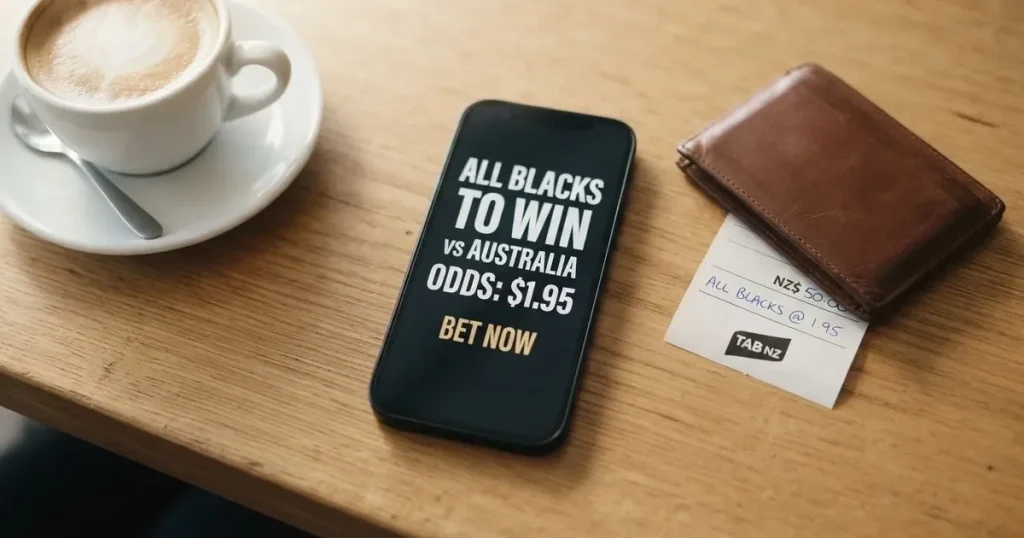
Neosurf is a prepaid voucher — you buy a code at a retail outlet and enter it at the cashier instead of handing over a card. It is convenient, it does not require a bank account, and it does not disclose the payer’s name to the merchant. That is the appeal. For a New Zealand punter the practical question is narrower: who among the brands a Kiwi actually meets will accept the voucher, and at what cost — in fees, in speed, in protection, in what they give up by going offshore.
This page reads that picture from the cashier’s side of the desk. It is current as of October 30, 2026, checked against the Racing Industry Act 2020 (as amended on 28 June 2025) and the Department of Internal Affairs’ published position on online betting.
Neosurf at the cashier: how the voucher actually works
A Neosurf voucher is a 10-digit code sold at convenience stores, service stations and tobacconists in denominations that usually run from NZ$15 up to NZ$250, with a single NZ$100 note being the most common buy. The card is operated by Safe-Voucher CH AG, a financial intermediary registered in Zug, Switzerland (company number CHE-291.042.536) and connected to the Swiss self-regulatory organisation VQF, which places it under anti-money-laundering supervision by FINMA. The company says its voucher can be spent at more than 20,000 websites across gaming, gambling, financial services and e-shopping.

A punter who uses Neosurf pays the retail price for the code and gets the full value on it; the only mark-up is what the reseller charges. There is no top-up fee from Neosurf itself, and no monthly account to maintain. The card protects privacy because the cashier never sees the buyer’s bank or card details, and a Neosurf balance can be split across multiple merchants or held until the punter decides where to spend it. The other side of that privacy is real: because there is no bank trail, account-recovery and dispute paths are weaker than with a card or a bank transfer.
For a sports bettor the practical limits on Neosurf as a deposit method sit in three places. First, a voucher pays in — it does not pay out. Any winning balance has to come back by a different method that the bookmaker accepts, and the bookmaker picks what that method is. Second, the deposit side usually caps the size of a single transaction at the voucher’s face value, so a punter who wants a NZ$1,000 first deposit needs to feed in several vouchers. Third, the voucher is a one-shot spending instrument. Once the balance is gone it is gone; “reload” in this market means going back to the shop and buying a fresh code.
That is the shape of the instrument a punter brings to the cashier. What the cashier at any given brand makes of it is where the cost picture begins.
The New Zealand landscape: who may lawfully take a Neosurf deposit
Since 28 June 2025 the New Zealand online betting market for racing and sports has been closed to anyone except TAB New Zealand and its sister brand Betcha. The change came through an amendment to the Racing Industry Act 2020 — section 74AAA — which says no person other than TAB NZ may offer racing or sports betting to anyone in New Zealand, regardless of where that person is resident or incorporated. The Department of Internal Affairs told providers serving New Zealand to withdraw with immediate effect on the same day.

The two online brands that survived that instruction are TAB (at tab.co.nz) and Betcha (at betcha.co.nz). Both run under the TAB NZ umbrella and are operated in partnership with Entain under a 25-year agreement signed in 2023, with profits split 50/50, a guaranteed minimum of NZ$150 million a year to TAB NZ for the first five years, and a one-off NZ$100 million payment by Entain to the racing sector. They are not rivals — they are the same group wearing two shirts, and both close under the same safer-gambling controls.
That is the lawful end of the market. The other end is made up of brands licensed elsewhere that still accept New Zealand customers at the cashier. Names that come up include Rooster.bet, Sportaza, BillyBets, Rabona, Winz.io, Glorion, Golden Panda, Telbet, Megapari, Boomerang Bet, Thunderpick, Spinbara, Betninja and LunuBet. Each of these holds a licence in its own jurisdiction — Rooster.bet, for example, names a Tobique Gaming Commission e-gaming licence (No. 0000002) held by Novatrix SRL — but none of them has a licence to take bets from people in New Zealand. Under section 74AAA of the Racing Industry Act 2020, taking such bets is itself the breach.
The Department of Internal Affairs is plain about what that costs the punter: overseas operators may be in jurisdictions with minimal consumer safeguards, may not return unspent credits and may not pay out large wins. The harm-minimisation tools that TAB NZ builds into its app (deposit limits, time-outs, self-exclusion, exclusion across both brands, a helpline number) reach TAB NZ only. There is no New Zealand complaints route into a Tobique-licensed or Curaçao-licensed bookmaker and no New Zealand exclusion register that a foreign brand reads. A punter who moves from TAB NZ to an offshore brand does not just change the odds line — they leave the regulator’s view.
That is the most expensive thing on the page: not a fee, not a margin, but the loss of the tools that exist for a reason. Most of the rest of this page is about the smaller costs that sit on top of it.
How the methods stack up at the cashier: the three that matter
| Brand | New Zealand status | What the operator’s own terms state on Neosurf |
|---|---|---|
| TAB | TAB NZ brand — lawful NZ operator | Neosurf is not listed as a TAB NZ deposit method; TAB NZ’s deposit methods are set by the operator’s own terms and not by statute. |
| Betcha | TAB NZ brand — lawful NZ operator | Neosurf is not listed as a Betcha deposit method; payment menu mirrors TAB NZ under the same group terms. |
| Rooster.bet | Not licensed in New Zealand | Card deposits (Visa, Mastercard) accepted, NZ$20 minimum, instant, no fees; card withdrawals take 1–3 banking days. Neosurf acceptance is not listed in the published payments note for Rooster.bet. |
The first two rows show the constraint the law puts on the cashier. The third row shows what an offshore brand publishes about its own cashier, which is the only honest place to read what a foreign operator will actually let a New Zealand punter do at the till. A punter who wants to deposit by Neosurf and stay inside the lawful New Zealand framework needs to know that Neosurf is not on the menus of the two NZ-licensed brands. A punter who wants to deposit by Neosurf and use one of the brands outside that framework needs to check that brand’s own cashier page for the current voucher status, because that page is updated when the operator feels like it.
The brisk reading of that table: Neosurf acceptance does not flow from the voucher, it flows from each operator’s choice, and in New Zealand the only operators still free to choose are the ones choosing not to take it.
Ranking the three: what each actually costs the punter
Three brands sit on this page because they are the brands a Kiwi most often meets when searching for a Neosurf-accepting bookmaker. One is lawful in New Zealand; two are not. Both unlawful brands stay in the comparison because New Zealand players meet them and the page misleads if it pretended otherwise.
TAB — the lawful New Zealand operator
TAB is the brand most New Zealand punters already know: tote and fixed-odds betting on thoroughbred, harness and greyhound racing, plus a sports book covering rugby, league, football, cricket, basketball, tennis and the major US leagues. The app carries Trackside live race streaming with in-app betting, racing form, Blackbook and Jockey Challenge tools, and a simplified wallet for deposits and withdrawals.
The deposit menu is published inside the app and on the operator’s own site. What matters for this page is that Neosurf is not on it. The available methods are the ones TAB NZ has built into its wallet — typically a New Zealand bank account transfer and the in-app card and POLi-style options, with limits and minimums set by TAB NZ’s own terms. A punter who wants Neosurf here cannot get it; a punter who wants TAB NZ pays whatever the published deposit path costs. Refund and payout times sit inside TAB NZ’s own settlement windows; the New Zealand racing-and-sports environment does not standardise them.
The cost picture TAB offers a New Zealand punter: a regulated product, a New Zealand harm-minimisation toolkit, a Problem Gambling Levy-funded helpline that the app surfaces (0800 654 655, text 8006), and a self-exclusion that runs across both TAB and Betcha. Inland Revenue says recreational gambling winnings — including TAB racing dividends — are generally not taxable, which keeps the after-tax edge identical to the pre-tax edge for a casual punter. TAB pays a Problem Gambling Levy of 0.74% (in force from 1 July 2025 to 30 June 2028), which is a TAB cost and not a punter cost, but it is the funding layer behind the helpline and the harm-minimisation programme.
TAB does not take Neosurf. That is the one fact a Neosurf-shopping punter needs to remember before anything else on this page. The trade-off is the other fact: TAB is the only brand on this list whose product the New Zealand state will help a punter enforce a complaint against.
Betcha — the second TAB NZ brand
Betcha sits in the same group as TAB and runs on the same wallet and the same safer-gambling framework. The product surface looks different — Betcha pitches itself at a younger, more casino-adjacent punter, with a sharper interface and a sports-first menu — but the cash desk behind the screen is TAB NZ’s.
That is the whole of it for this page. Neosurf is not in the cashier. Payout times, deposit minimums and safer-gambling controls run to the TAB NZ terms that already govern TAB, and the helpline and exclusion tools are the same tools. Inland Revenue’s “recreational winnings generally not taxable” position applies identically.
The cost a punter pays by choosing Betcha over TAB is the cognitive one: Betcha’s product can read as if it were a separate bookmaker, which makes it tempting to think a punter can self-exclude on TAB and keep using Betcha. They cannot — the exclusion runs across both brands — and that is a feature, not a bug.
Rooster.bet — accepted offshore, unlawful from New Zealand
Rooster.bet is an international sportsbook and casino under a Tobique Gaming Commission e-gaming licence (No. 0000002) held by Novatrix SRL. It is on this list because the brand ranks for “sports betting with Neosurf”-style searches, and because New Zealand players meet it. It is not on this list because New Zealand law protects a punter who bets there.
What the operator’s own terms publish: card deposits (Visa and Mastercard), NZ$20 (or €20) minimum, instant, no fees; card withdrawals take 1–3 banking days. Neosurf acceptance is not listed in the published payments note for Rooster.bet, so a punter who arrived here for the voucher finds a card cashier instead. The brand does not list a New Zealand licence, does not name a New Zealand complaints route, and does not build New Zealand safer-gambling tools into its product.
The cost picture for a New Zealand punter at Rooster.bet: the published no-fee, instant deposit is real at the cashier. Behind it sits the Department of Internal Affairs’ published warning that overseas operators may not return unspent credits and may not pay out large wins. A bonusing programme might read as extra value on top, but no New Zealand rule constrains the size or terms of those offers; a wagering requirement that reads small against one bonus can read differently when the rollover adds up. Payout speed on the card side is 1–3 banking days after the operator’s own approval — the bank’s clock, not the brand’s.
The trade at Rooster.bet is the same trade that runs through every offshore brand on this page: a wider cashier and a more generous-looking offer in exchange for the harm-minimisation tools and the regulator’s complaints path a New Zealand punter leaves behind. The brand does not state a New Zealand licence and does not need to — taking a bet from a person in New Zealand is itself the section 74AAA breach.
What New Zealand law actually says about betting with an offshore brand
The Racing Industry Act 2020, as amended by the Racing Industry Amendment Act 2025, draws a single line through the online betting market for racing and sports in New Zealand. The line is section 74AAA: no person other than TAB NZ may offer racing betting, sports betting or other racing or sports betting to a person in New Zealand, regardless of where that person is resident or incorporated. The Department of Internal Affairs is the regulator under the Gambling Act 2003 and monitors compliance with the prohibition.
There is no licence to apply for and no licence register for bookmakers, because there is only one lawful provider. The change took effect on 28 June 2025; on the same day the Department of Internal Affairs told providers serving New Zealand to withdraw with immediate effect. Greyhound racing is closing in stages from 1 August 2026, and from that date offshore operators may not take bets on greyhound races either.
What that means for the punter, plainly. Section 19(4) of the Gambling Act 2003 — inserted in 2025 — says an individual may not be convicted for placing a bet with an offshore betting operator in breach of section 74AAA, so no published penalty for the player was found and none can be invented here. The lawful side of the line is straightforward: bet with TAB or Betcha, deposit by an accepted method, withdraw through TAB NZ’s wallet, complain through TAB NZ’s own customer channels and, if that fails, the disputes framework that comes with a New Zealand operator. The offshore side of the line is not: an overseas bookmaker taking your bet is in breach of section 74AAA, and the regulator’s published warning is that such operators may be in jurisdictions with minimal consumer safeguards, may not return unspent credits and may not pay out large wins.
New Zealand does not geo-block bookmaker sites. The law puts liability on the operator, not on the punter’s router. A punter who reaches an offshore brand does so over an open network and at their own judgment.
The tax picture does not soften that. Inland Revenue’s published position is that recreational gambling winnings — including dividends from New Zealand racing — are generally not taxable, and a person who bets as a business is a different case. The operator side of the tax bill does not help a punter: TAB NZ pays the Problem Gambling Levy (0.74%); overseas operators supplying New Zealand residents pay online gambling duty (12% of profits since 1 July 2024, 16% from 1 January 2027). Paying online gambling duty is not the same as holding a New Zealand betting licence — the duty is collected on unlawful supply, and the page never writes that paying it makes an offer lawful.
The Online Casino Gambling Act 2026 changes the casino side of the market, not the betting side. TAB New Zealand winning the right to apply for a casino licence does not extend the betting monopoly; betting under section 74AAA remains TAB NZ’s exclusive. The 2026 casino law does not create a route to a New Zealand sports-betting licence.
Safer gambling in New Zealand: the toolkit the law actually funds
The harm-minimisation framework New Zealand has is built around a single operator, a single levy and a small public set of services. TAB NZ is required to keep the risks of problem and underage gambling minimised and pays the Problem Gambling Levy (0.74%, in force from 1 July 2025 to 30 June 2028) into the services that follow.
Inside TAB NZ and Betcha’s apps the tools available are deposit limits, time-outs and self-exclusion. The self-exclusion applies across both brands (TAB and Betcha), so an exclusion on one is an exclusion on the other — there is no way to swap between them and keep betting. Account opening requires a verified New Zealand address and proof of identity, which is the gate the betting-under-18 offence under section 89 of the Racing Industry Act 2020 closes. The age for TAB NZ betting is 18 (land-based casinos are 20 — they are different products under different permits).
Outside the app the helpline and the text line are the same across both brands: the free Gambling Helpline at 0800 654 655, with a text line at 8006, and Safer Gambling Aotearoa as the public service behind them. There is no single national online-betting exclusion register: the register the casino law will require from 2026 is for online casinos only, and it does not extend to TAB NZ’s sports and racing product.
The offshore side of the market has no comparable layer. Rooster.bet, like other brands licensed outside New Zealand, builds its own safer-gambling tools against its own licence and its own market. A punter who moves offshore does not lose the helpline — the helpline number still works — but loses a New Zealand operator that will engage with a self-exclusion request, a deposit-limit application and a complaint, and loses the regulator’s complaints framework behind them.
The advertising side of the picture is also narrow: the Advertising Standards Authority’s Gambling Advertising Code applies to betting advertisements, which must not target children (under 14) or young people (14 to under 18), judged by context, appeal and expected audience (25% or more of the audience counts as significant where accurate data exists), and must not encourage harm or mislead on terms. There is no New Zealand equivalent of a “whistle-to-whistle” ban for betting, so live-broadcast ad volumes are not capped by statute.
The honest read of that toolkit: for a New Zealand punter who wants the regulator’s tools, the answer under section 74AAA is the TAB NZ product, on the TAB NZ terms, against the TAB NZ wallet. The voucher is the method, the wallet is what makes the method safe, and in New Zealand only one wallet exists.
Cost picture by the numbers: turnover, margins and what a Neosurf deposit actually buys
The arithmetic a Neosurf punter cares about runs across three numbers: how much betting the bonus costs in turnover, what the market margin leaves the bookmaker, and what the bookmaker’s own minimums do to a small budget.
The deposit-side minimum at the published Neosurf-accepting international brands typically sits between NZ$10 and NZ$20 — the same range Rooster.bet publishes for cards (NZ$20). At TAB NZ the deposit minimums are operator-set and come from the published wallet terms, not from a statute, and are not always the same number as at an offshore cashier. A punter who starts at NZ$50 is comfortably above both sets of minimums and small enough that a single NZ$100 Neosurf voucher will cover it; a punter who starts at NZ$5 is below every published minimum on this page.
The turnover side is where the marketing meets the math. A bonus advertised as “100% up to NZ$100” sounds like free money until the wagering factor is read. At a 5x rollover on the bonus, a NZ$100 bonus takes NZ$500 of qualifying bets before it converts; at 8x, NZ$800. At a 10x rollover — common in the offshore market — a NZ$100 bonus takes NZ$1,000. None of those rollovers happen at any odds: most international sportsbooks require a minimum price around decimal 1.50 to 2.00 per leg, with the exact minimum published in the offer terms and worth reading before the bonus is claimed. A punter who bets on short favourites clears the rollover cheaply in turnover terms; a punter who bets on longshots burns stake without clearing much. The cleaner the rollover language in the offer’s own page, the more honest the cost.
The margin side is the number the bookmaker does not advertise. On a typical 1X2 football market the bookmaker’s margin sits between 4% and 8% of total stakes — 5% is a reasonable midpoint, leaving 95% in payout share. On a tote (pool) market at TAB NZ the takeout is different again: a portion of the pool is withheld to fund the dividends and the operating cost, and the published takeout rate governs how much of every NZ$1 bet comes back to winning punters. A punter who treats a tote dividend like a fixed-odds payout misreads it, because a tote price is the last bettor in the pool’s view of the race, not the bookmaker’s.
The deposit-withdrawal symmetry is the third number. A Neosurf voucher pays in only; what comes back has to go by whatever the cashier offers (card, bank, crypto, e-wallet), at whatever speed the operator allows. Rooster.bet’s published card withdrawal time is 1–3 banking days after approval; crypto-friendly brands publish faster windows for crypto payouts but slower ones for everything else. The bank and the bookmaker each take their slice of that timeline, and the punter sits between them.
The arithmetic closes with the absent row. A NZ$100 Neosurf deposit at an offshore brand that accepts it, with no bonus claimed, on a 5% market margin, leaves about NZ$95 in payout share across a representative set of bets — and, over a long enough run, returns less in pounds of winnings because of that margin. The same NZ$100 deposit at TAB NZ, into the same kind of bets on the TAB NZ fixed-odds book, carries TAB NZ’s own market margin (set per market, published on each event) plus the racing takeout if the punter chose pool bets. The size of the gap between the two margins is the headline cost figure on this page, and the punter’s choice of brand is the only thing that changes it.
A punter who wants a plain-English rule: the cheapest bet is the one on the market with the smallest margin, taken with the smallest bonus rollover that can be cleared honestly, and paid back through a method that has been used before so the cashier does not stall on first withdrawal. None of those three choices is fixed by the deposit instrument; all three are fixed by the brand.
Practical cashier steps: paying in, playing through, taking winnings out
A New Zealand punter who decides to bet — at TAB NZ, where the law allows it — runs through a short, repeatable sequence. Open the TAB NZ app (or Betcha). Verify the New Zealand address and identity, which is the gate the section 89 minimum-age rule closes. Make a first deposit from a method the wallet supports, in an amount above the published minimum. Place bets within the published wallet limits (per-event, per-day, per-multi). At settlement, withdraw winnings by a method already used for deposit, with TAB NZ’s own settlement clock governing payout speed.
The offshore cashier at a brand like Rooster.bet runs the same shape without the New Zealand gates. Card deposits at NZ$20 minimum, card withdrawals at 1–3 banking days, no operator-level safer-gambling controls beyond what the brand itself publishes. A punter who walks both cashiers in the same week will see why the New Zealand side takes longer to enter and shorter to leave.
The Neosurf-only punter — the one who only wants to use the voucher — has a narrower map. TAB NZ does not list Neosurf. Betcha does not list Neosurf. Rooster.bet’s published payments page does not list Neosurf. The brands that do list Neosurf are international brands a New Zealand punter can reach, and reaching them puts the punter on the offshore side of section 74AAA with no New Zealand regulator behind the cashier.
That is the cost picture by the cashier. The rest of the page is the questions a punter asks first.
Frequently asked questions about Neosurf betting in New Zealand
Can I use Neosurf on betting sites?
Neosurf is a prepaid voucher that lets you pay online without a card and without disclosing personal information at the cashier; the operator behind it is registered in Switzerland and operates under FINMA anti-money-laundering oversight. Whether a betting site accepts it depends entirely on the site’s own cashier. In New Zealand the only lawfully available online betting brands are TAB and Betcha, and neither lists Neosurf as a deposit method. International brands that do list it are not licensed to take bets from people in New Zealand under section 74AAA of the Racing Industry Act 2020.
Do any sports betting sites accept Neosurf?
Neosurf states that its voucher can be used at more than 20,000 websites across gaming, gambling, financial services and e-shopping, and several international sportsbooks list it in their cashier. For a New Zealand punter the catch is the law: under section 74AAA of the Racing Industry Act 2020, only TAB NZ may offer racing or sports betting to a person in New Zealand. The deposit instrument available at an international brand does not change that — the cashier may accept Neosurf while the operator remains in breach of New Zealand law.
What betting apps use Neosurf?
Apps at international brands sometimes list Neosurf alongside cards, e-wallets and crypto, and the Neosurf site itself points users to merchants that accept the voucher. The two New Zealand betting apps — TAB and Betcha, both run by TAB NZ — do not list Neosurf, because their deposit menus are operator-set under the same TAB NZ wallet and Neosurf is not in that wallet. International betting apps that list Neosurf sit on the offshore side of the New Zealand betting market.
Which payment methods does TAB NZ accept, and where are they listed?
TAB NZ’s deposit methods are not set by statute and come only from the operator’s own terms. They are published inside the TAB and Betcha apps and on the operator’s own site, alongside minimums, maximums and settlement windows. Neosurf is not among them. A punter who wants to see the current set looks in the wallet section of the active app, not at a third-party comparison, because the published list is the only authoritative version of itself.
Which bookmaker may lawfully take sports and racing bets in New Zealand?
Only TAB New Zealand, through its two online brands TAB and Betcha. Section 74AAA of the Racing Industry Act 2020 (in force since 28 June 2025) says no person other than TAB NZ may offer racing betting, sports betting or other racing or sports betting to a person in New Zealand, regardless of where that person is resident or incorporated. The Department of Internal Affairs told providers serving New Zealand to withdraw with immediate effect on the same day. There is no licence to apply for and no licence register for bookmakers, because there is only this one lawful provider.
Payments – leaguebetsnz
Content created by the «leaguebetsnz» team
